When you or a family member feels unwell, the last thing you want is a long wait to see a doctor. Getting a same day GP appointment often becomes the top priority, but knowing the best way to do it can feel overwhelming.
You essentially have three main routes to go down: the familiar NHS path, the speed of a private in-person clinic, or the convenience of a virtual GP consultation. Each has its own pros and cons, and the right choice really depends on your specific situation.
Your Immediate Options for a Same Day GP Appointment
Feeling ill is stressful enough without adding the hassle of booking an appointment. When symptoms pop up unexpectedly, knowing where to turn for quick, reliable medical advice can make a huge difference. Your decision will likely come down to a mix of things—how urgently you need to be seen, your budget, and whether you prefer a face-to-face chat or a video call.
Understanding the Three Main Pathways
The NHS is, of course, the bedrock of UK healthcare, and most people’s first thought is to call their local surgery. There's some good news here: access is getting better. In September 2023, a significant 44.1% of all GP appointments in England were booked for the same day. The British Medical Association keeps a close eye on these figures. Still, the reality is that high demand, especially first thing in the morning, can make nabbing one of those slots a real challenge.
That’s where a private in-person clinic comes in as a solid alternative. These services are built around speed and convenience, often giving you a longer consultation and more choice over appointment times. It's a fantastic option if you feel you need a proper physical examination without the wait and are happy to cover the cost.
Then there’s the virtual GP. This route lets you have a consultation over a video or phone call, which is perfect for more straightforward issues, getting a repeat prescription, or when you’re simply too unwell to leave the house. It blends the quick access of private care with the sheer convenience of staying put.
Choosing the right path is crucial. While a GP can handle most urgent but non-life-threatening issues, it's vital to distinguish this from a true emergency. Understanding the differences between an emergency room and urgent care can help you make a safe decision when every minute counts.
To help you decide, here’s a quick look at the options side-by-side.
Quick Comparison of Same Day Appointment Options
In short, there's a good option for almost every situation. Here's a quick rundown of when each one shines:
- NHS General Practice: Stick with your NHS GP for managing long-term health issues where continuity is key. It’s also the go-to if you prefer not to pay for your appointment.
- Private In-Person Clinic: Ideal when you have an acute illness that needs a hands-on examination, if you need an appointment that fits around your work schedule, or you simply want more time to discuss your concerns with a doctor.
- Virtual GP Consultation: Perfect for common problems like colds, skin issues, or mental health follow-ups where a conversation and visual check are all that’s needed.
Proven Tactics for Booking Your Appointment
Knowing your options is one thing, but actually securing a same day GP appointment when you really need one is another beast entirely. It often comes down to having a clear strategy, whether you're navigating the NHS or going private. Let's move past the theory and get into the practical, actionable steps that make all the difference.
The path you take will depend on whether you choose the NHS, a private in-person clinic, or a virtual service. Each has its own rhythm and booking quirks, so a slightly different approach is needed for each.
This visual guide breaks down the typical journey for getting care through the main healthcare routes available for a same day GP appointment.
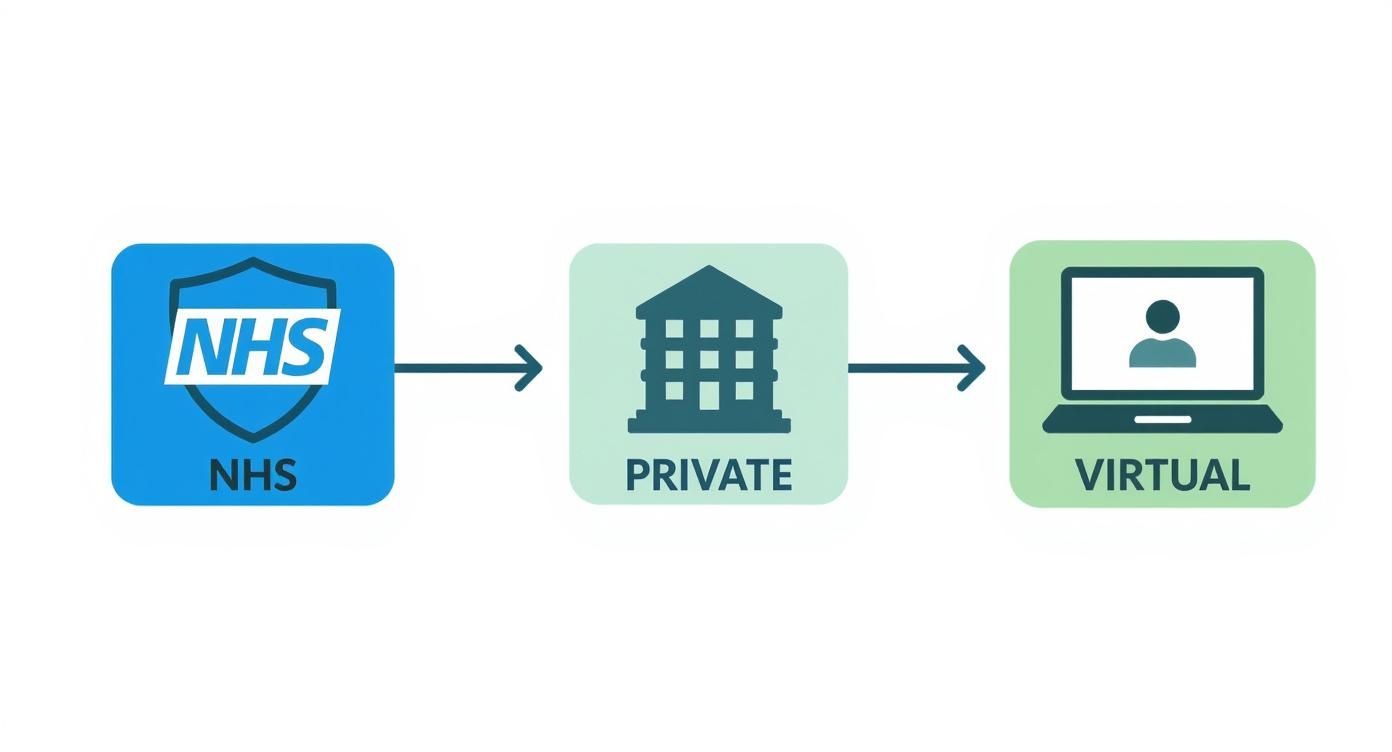
As you can see, the journey to a GP can look very different. The private and virtual routes often provide a much more direct—and faster—booking experience compared to the multi-step NHS process.
Mastering the NHS Booking System
For most of us, getting an NHS appointment means bracing for the infamous "8 am scramble." When you call your local surgery the second it opens, you're up against dozens of other people doing the exact same thing. Success often hinges on being clear and concise from the get-go.
When the receptionist finally answers, be ready to state your symptoms briefly and explain why you feel it’s urgent. Instead of just saying, "I feel unwell," try something more specific like, "I've had a severe sore throat and a high fever since last night, and it's getting worse." This gives them the information they need to triage your call properly.
Many GP practices have now shifted to online consultation forms (like eConsult). If you're using one of these, be methodical.
- Be Specific: Give a clear timeline. For instance, "The chesty cough started two days ago, but the breathlessness began this morning."
- Highlight Key Concerns: If you have a particular worry, like a family history of a related condition, mention it. It adds crucial context for the clinician.
- Be Honest: Don't play down your symptoms, but don't exaggerate them either. The goal is to get an accurate assessment so you receive the right level of care.
It’s also worth checking the NHS App. Sometimes you can spot and book available slots directly, saving you from a long wait on the phone.
Booking with Private and Virtual GPs
Booking a private GP appointment is usually a far more straightforward affair. Most private clinics, including The Vesey, offer easy-to-use online booking portals. You can see their availability in real-time, pick a time that actually works for you, and confirm your slot in minutes. It completely removes the stress of the morning phone rush. The real win here is the control and certainty it gives you.
Key Takeaway: The biggest advantage of private booking is predictability. You aren't just crossing your fingers hoping for an appointment; you're actively choosing one that fits your life, often well outside the typical 9-to-5.
Virtual GP services take this convenience to the next level. The process is almost always managed through an app. You just log in, choose the kind of consultation you need, and browse a list of available doctors and times. Because these services are so flexible, you can often find an appointment within the hour.
For anyone trying to figure out how to squeeze appointments into an already packed schedule, learning more about flexible GP appointment scheduling can offer some really valuable insights. Whichever route you choose, being prepared and understanding the specific booking process is your best bet for securing that same day appointment.
Choosing Between Private and NHS Services
So, you know how to book an appointment, but the bigger question is often where. When you need to see a GP on the same day, the choice between the NHS and private care isn't just about cost—it’s about weighing up waiting times, how long you get with the doctor, and overall flexibility.
The NHS is the backbone of our healthcare system, but getting an urgent appointment can feel like a lottery. While recent figures show that 53.8% of adults needing an urgent appointment managed to get one the same day, that still leaves nearly half facing a frustrating delay.
This is exactly where private healthcare steps in, offering a reliable alternative built around speed and convenience.
What’s the Patient Experience Like?
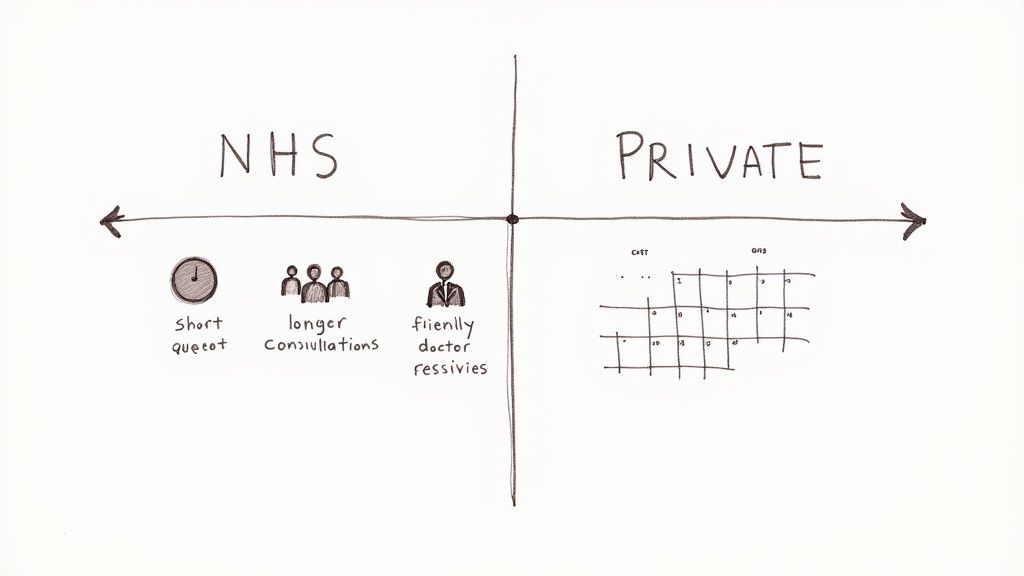
One of the biggest differences you’ll notice is the appointment itself. An NHS GP consultation is typically a brisk 10 minutes. That’s fine for a straightforward issue, but it can feel incredibly rushed if you have a couple of things to discuss or a more complex problem.
Private clinics, on the other hand, usually offer longer standard appointments, often 15-20 minutes or more. That extra breathing room allows for a proper conversation, a thorough examination, and the chance to ask all your questions without one eye on the clock. If you want to understand this model better, our guide explaining what private healthcare is is a great place to start.
Then there’s the matter of onward care. Your NHS GP is fantastic, but getting a referral for a specialist or a diagnostic test often means joining another waiting list. Many private clinics have specialists and services on-site, so you can move from diagnosis to treatment far more quickly.
Deciding between public and private healthcare isn't just about speed; it's about control. Private options give you more control over the when, where, and who of your medical care, which can be incredibly reassuring when you're feeling unwell.
Comparing Your Options at a Glance
Choosing where to go for a same-day appointment is a bit like weighing up your options for other urgent needs, such as understanding the difference between emergency dental extraction costs under NHS and private care. Each route has its place, and the right one for you depends entirely on your situation.
To help you decide, let's break down the key differences between NHS general practice, a private clinic, and a virtual GP service.
Feature Breakdown NHS vs Private GP Appointments
Ultimately, the best choice depends on what matters most to you in that moment. Is it the cost-free access of the NHS, the speed and thoroughness of a private clinic, or the sheer convenience of a virtual consultation from your own home? Each has a clear role to play in modern healthcare.
How to Prepare for Your Consultation
Getting that same day GP appointment is a huge relief, but the consultation itself is where the magic happens. To get the most out of your limited time with the doctor, a little bit of prep work goes a long way. Whether you’re seeing someone in person or online, being organised helps you and your GP work together to get you a clear plan.
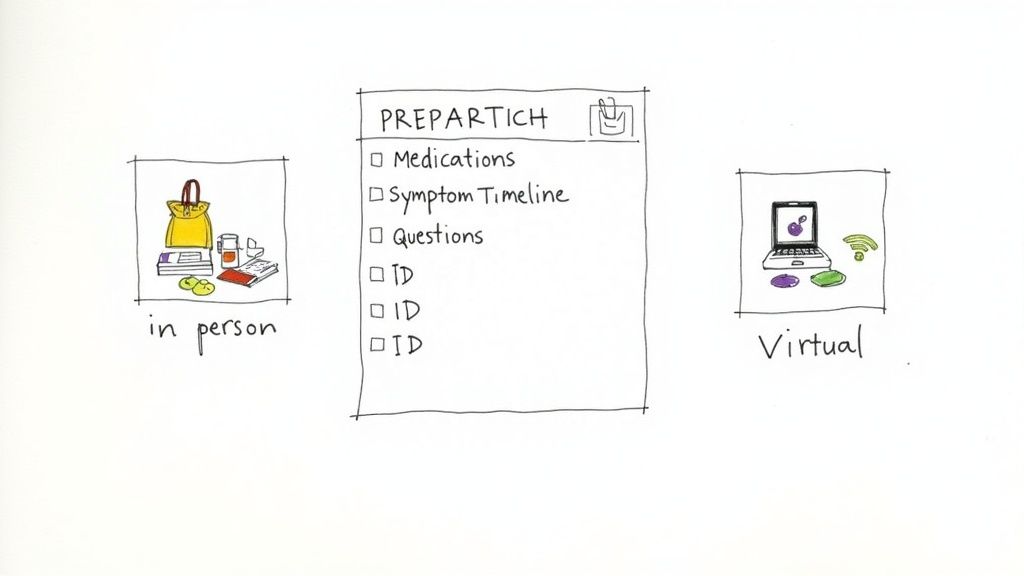
Before you even walk in the door or log on, take a moment to gather your thoughts. Think about your symptoms from the beginning. When did they start? What makes them better or worse? Just jotting down a quick timeline on your phone or a scrap of paper can stop you from forgetting crucial details when you’re on the spot.
What to Have Ready
Being prepared simply means having the right information to hand. Before your consultation, it’s worth pulling together a quick checklist of the essentials.
- A List of Your Symptoms: Write down exactly what you're feeling, how long it's been going on, and any patterns you've picked up on.
- Current Medications: This includes any prescriptions, over-the-counter medicines, vitamins, or supplements you take. Don't forget the dosages.
- Key Medical History: Any long-term conditions, previous surgeries, or allergies are important to mention.
- Your Main Questions: Have one or two key questions written down that you absolutely need answered. This ensures you won't leave feeling uncertain.
This simple act helps frame the conversation and gives the GP the full picture from the get-go. It also helps you describe your symptoms more clearly. If you want to better understand the terms your doctor might use, resources for mastering medical terminology can be really helpful.
Preparing for a Virtual Consultation
Virtual appointments need a few extra tech checks. The advice you'll get is just as valuable, so making sure the technology is on your side is key. Our guide on what to expect from a virtual GP service can give you a bit more detail on this.
Find a quiet, private spot with good lighting where you won’t be disturbed. About 15 minutes before your slot, test your internet connection, camera, and microphone. It’s the best way to avoid last-minute technical glitches eating into your consultation time.
Key Takeaway: Preparation transforms your appointment from a passive experience into an active collaboration. By bringing organised information, you empower your GP to make a more accurate and efficient diagnosis.
While remote consultations are brilliant, face-to-face care is still vital. Over a recent 12-month period, 62.9% of the 163.5 million GP appointments were delivered in person, which just goes to show how important these traditional consultations are for diagnosis and patient peace of mind. By preparing well, you make every minute of your appointment count, no matter how you have it.
When you’re suddenly unwell, the last thing you want is a stressful scramble to see a doctor. Turning to a private GP clinic for a same day GP appointment cuts through the uncertainty. It’s about getting reliable, prompt care and regaining a sense of control when you feel at your most vulnerable.
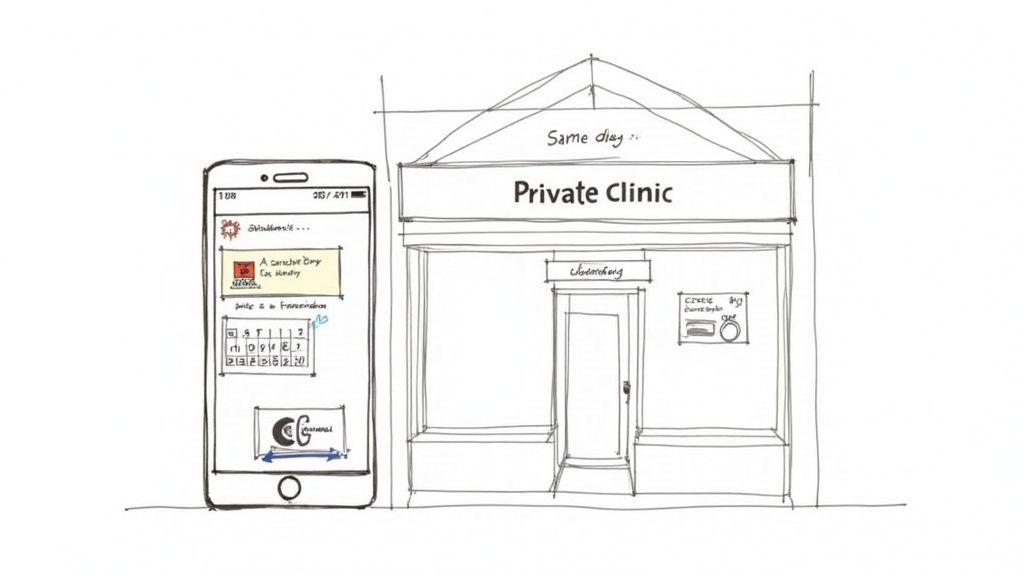
Private clinics are built around one thing: patient access. One of the biggest reliefs is their extended opening hours. Here at The Vesey, we’re open seven days a week, with appointments available from early morning to late evening. That kind of flexibility means you don't have to blow up your work schedule or cancel your day just to get seen.
Making the Booking Process Simple
The booking process itself is refreshingly simple. Forget the 8 am phone-in lottery. Modern private clinics use intuitive online booking systems where you can see every available slot in real time. You just pick a time that works for you, pop in your details, and your appointment is locked in within minutes.
This approach just makes sense.
- Immediate Confirmation: Your slot is secured instantly. No waiting around for a callback.
- Total Transparency: You see the entire schedule, allowing you to pick a time that genuinely fits your life.
- Reduced Stress: The whole process is calm and efficient, removing that awful anxiety of competing for a handful of appointments.
On top of that, most private GPs now offer both in-person and virtual consultations. This hybrid model gives you options. You can be seen face-to-face for a proper physical examination, or if you're feeling too rough to travel, you can speak with a doctor from the comfort of your own home.
The Value of Comprehensive Care
It’s not just about getting through the door; the quality of the consultation itself is what really counts. Private appointments are almost always longer, giving you the time to properly discuss your symptoms without feeling like you're on a conveyor belt. That extra time is priceless, especially if you have a complex issue or several things you need to talk about.
Many private clinics also offer a range of on-site services, like blood tests or scans. This integrated setup means you can often get the answers you need and a treatment plan in place much, much faster.
Choosing a private clinic also means choosing regulated, high-quality care. Reputable providers are registered with the Care Quality Commission (CQC), which holds them to strict national standards for safety and clinical effectiveness. This oversight is a crucial layer of assurance that you’re receiving care you can trust.
Common Questions About Same-Day GP Appointments
Even when you know your options, a few practical questions always pop up when you're trying to book a same-day GP appointment. When you’re feeling unwell, the last thing you need is more confusion. Getting clear answers upfront helps you navigate your healthcare with confidence.
Let's tackle some of the most common queries people have when they need to see a doctor quickly.
What Does a Private Same-Day GP Appointment Cost?
This is usually the first question on everyone's mind. While prices vary, a standard private same-day consultation in the UK typically lands somewhere between £80 and £150. This fee generally covers the appointment itself and the doctor’s time to write a private prescription if needed.
It's smart to check for potential extra costs, though. Things like blood tests, scans, or referral letters to specialists usually aren't included in the initial consultation fee. It’s always best to check the provider’s website for a clear breakdown of costs. For example, you can review a detailed private GP services price list to see exactly what’s covered and avoid any surprises.
Can I Get a Sick Note?
Absolutely. If you’re too ill to work, both NHS and private GPs can issue a Statement of Fitness for Work, which you probably know as a 'fit note' or sick note. A same-day appointment is a perfectly normal way to get this sorted for a sudden illness.
The GP will assess your condition during the consultation. If they agree you’re not well enough to do your job, they'll issue the fit note, either electronically or as a hard copy.
A fit note is a legal document that provides evidence of your illness to your employer. It can state you are 'not fit for work' or that you 'may be fit for work' with certain adjustments.
What if I Cannot Get an Appointment Anywhere?
It’s an incredibly frustrating feeling when you’ve tried every option and still can't get seen. If you're genuinely stuck, your next official port of call should be NHS 111, which you can access online or by phone. Their trained advisors can assess your symptoms and point you towards the most suitable service.
However, you need to know when to skip this step and head straight to an Urgent Treatment Centre (UTC) or A&E.
Go for immediate help if you have symptoms like:
- Chest pain or a suspected heart attack
- Difficulty breathing
- Severe bleeding that won’t stop
- Loss of consciousness or a suspected stroke
- A severe allergic reaction
For issues that are less critical but still urgent—think sprains, minor burns, or suspected broken bones—a UTC is often your best bet.
At The Vesey, we take the stress out of finding timely medical care. Our simple online booking system and extended opening hours mean you can secure a same-day GP appointment quickly and easily. Book your consultation today at https://www.thevesey.co.uk.
CQC-regulated private hospital in Sutton Coldfield. 25+ specialties, 68 expert clinicians. Open 7 days, 8am–8pm. No waiting lists. Free parking.
Book an appointment