
A kidney function test isn't just another routine check-up. It's a remarkably simple yet powerful way to see how well your body's most sophisticated filtration system is working, using just a small sample of blood or urine. Think of it as a performance review for your kidneys, giving you and your doctor a clear snapshot of their health and catching potential issues long before they become serious.
Understanding Your Kidneys and Why Testing Matters
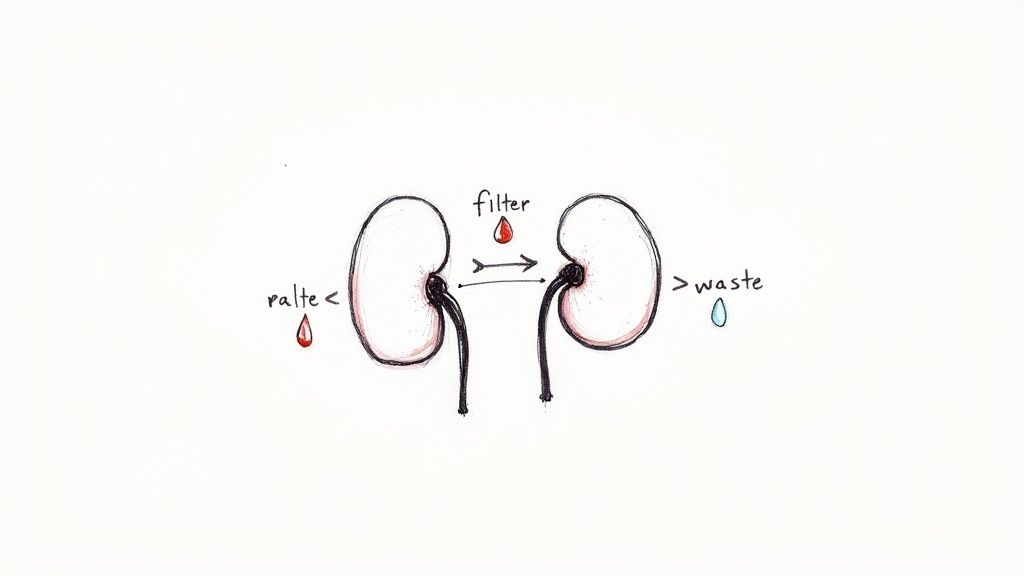
Tucked just below your ribcage are two bean-shaped organs, each about the size of your fist. Despite their small size, your kidneys are absolute workhorses, performing life-sustaining jobs around the clock. Their main task? To filter about 200 litres of blood every single day, pulling out waste products, toxins, and excess water to create urine.
Imagine them as a highly advanced, self-cleaning water purification system. As blood flows through, they meticulously separate the good from the bad, sending clean blood back into circulation and diverting waste for removal. This process is essential for keeping your entire body in balance.
More Than Just a Filter
But filtration is only part of the story. Your kidneys are multi-talented, also playing a crucial role in:
- Regulating blood pressure: They manage your body's fluid levels and release hormones that help keep your blood pressure stable.
- Balancing electrolytes: Kidneys maintain the perfect levels of minerals like sodium and potassium, which are vital for your nerves and muscles to function properly.
- Producing red blood cells: They produce a hormone called erythropoietin, which tells your bone marrow to make the red blood cells that carry oxygen throughout your body.
- Supporting bone health: They activate vitamin D, which is essential for your body to absorb calcium and maintain strong, healthy bones.
The tricky part is that kidneys are so efficient they can start to lose function without you feeling any different. They're incredibly resilient and can compensate for a long time, meaning symptoms often don't appear until a significant amount of kidney function has been lost. This is exactly why testing is so important—it spots the subtle changes long before you would.
A routine kidney function test acts as an early warning system. By measuring key markers in your blood and urine, it gives an objective assessment of how effectively your kidneys are doing their many jobs.
This proactive check is especially vital if you have risk factors like high blood pressure, diabetes, or a family history of kidney disease. Catching something like Chronic Kidney Disease (CKD) early means you can make lifestyle changes and start treatments that can help preserve kidney function and prevent more serious problems down the line. Knowing your numbers empowers you to have better conversations with your doctor and take control of your health.
Key Reasons for Having a Kidney Function Test
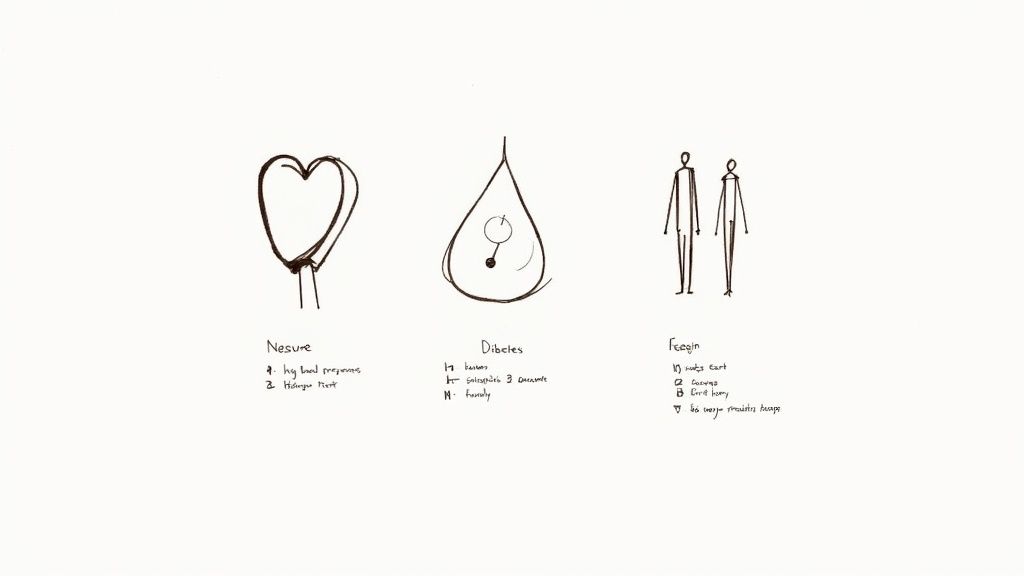
A kidney function test usually comes up for one of two reasons: either your doctor is proactively monitoring your health due to known risk factors, or they’re investigating new symptoms that don’t have an obvious cause. Either way, the objective is the same: to get a clear, data-driven picture of how well your kidneys are doing their job.
Think of it like getting your car’s engine checked. You might do it as part of a routine service when it hits a certain mileage (that’s proactive monitoring), or because you’ve heard a strange noise (that's investigating symptoms). Both are sensible reasons to prevent a bigger problem down the line.
The table below outlines some of the most common triggers that lead to a kidney function test.
Understanding these triggers helps clarify why this simple set of tests is such a powerful tool in modern medicine.
Proactive Monitoring for Key Risk Factors
For many people, a kidney function test is a preventive step. Certain health conditions and lifestyle factors put extra strain on the kidneys over time, even if you feel perfectly healthy. A doctor will almost certainly recommend regular testing if you have one of the main risk factors.
The big one is high blood pressure (hypertension). Imagine the delicate blood vessels inside your kidneys are like tiny, fragile pipes. If water is constantly being forced through them at high pressure, they eventually get damaged. This damage makes it harder for them to filter waste from your blood, and over the years, it can lead to a serious decline in function. This is why managing blood pressure is so critical, and exploring options like foods that lower blood pressure is always a good idea.
Another major risk factor is diabetes, both Type 1 and Type 2. Consistently high blood sugar levels can damage the kidneys' tiny filtering units, a complication known as diabetic nephropathy. It’s one of the leading causes of kidney failure, which is why regular screening is an essential part of managing diabetes.
Other key risk factors that warrant testing include:
- A family history: If your parents or siblings have had kidney disease, your own risk is higher.
- Heart disease: The heart and kidneys are partners in health. When one struggles, the other is often affected.
- Obesity: This is a major contributor to both high blood pressure and diabetes, which in turn increases your kidney risk.
- Age: Our kidney function can naturally decline as we get older, making checks more important for anyone over 60.
Investigating Unexplained Symptoms
Sometimes, the need for a kidney function test is more urgent. Your body might be sending out subtle signals that your kidneys are struggling to cope. Because the kidneys are so resilient, these signs often only appear after a fair amount of function has already been lost, so it's vital not to ignore them.
Persistent and unexplained fatigue is a very common clue. When kidneys aren't filtering properly, toxins and waste products build up in the blood, leaving you feeling constantly drained and weak.
The symptoms of declining kidney function are often non-specific and can easily be attributed to other causes. This is why a kidney function test is essential—it provides the objective data needed to confirm or rule out a kidney-related issue.
Other tell-tale signs that might lead your doctor to order a test include:
- Swelling (oedema): Puffiness in your ankles, feet, or hands can be a sign that your kidneys can't remove excess fluid effectively.
- Changes in urination: This could mean you’re going to the toilet more or less often, especially at night. You might also notice your urine is foamy or bubbly, which can indicate that protein is leaking out.
- Shortness of breath: When fluid builds up, it can affect the lungs. Anaemia (a shortage of red blood cells), another complication of kidney disease, can also leave you feeling breathless.
Over the last decade, there’s been a significant rise in awareness around these risk factors. In the UK, rates of serum creatinine testing shot up by around 40% between 2004 and 2013, largely because clinical guidelines started pushing for better, more proactive monitoring of kidney health. This shift is a key reason your GP might suggest a test as part of a general check-up, particularly if you have other risk factors. For anyone wanting a broader health overview, a https://www.thevesey.co.uk/blog/private-health-screening can provide valuable insights into your kidney function and much more.
Decoding the Key Markers of Kidney Health
Think of your kidney function test results as a detailed report card. Each number tells a small part of a much bigger story about your health, and understanding these key markers is the first step in reading that story. Instead of a confusing list of medical terms, let's treat each marker as a different detective, each searching for specific clues to figure out how well your kidneys are doing their job.
We’ll start with the most common and important markers found in your blood and urine. Each one provides a unique piece of the puzzle, and when we put them all together, they create a clear, comprehensive picture of your kidney health.
The Efficiency Score: eGFR
The most important number you’ll see is the estimated Glomerular Filtration Rate (eGFR). If your kidneys are the body's purification plant, the eGFR is their overall efficiency score. It isn't measured directly; instead, it's a clever calculation that estimates how many millilitres (ml) of blood your kidneys are filtering every single minute.
The calculation uses the level of a waste product in your blood called creatinine, then factors in your age and sex to produce one powerful number. A higher eGFR generally means your kidneys are filtering effectively. A lower number suggests their filtering capacity has dropped.
eGFR is considered the single best indicator of overall kidney function. It offers a straightforward way to track your kidney health over time and is what doctors use to classify the different stages of kidney disease.
Because it provides such a clear summary, the eGFR is the central piece of information that nearly every other result relates back to.
Creatinine: The Muscle Waste Marker
The key ingredient used to calculate your eGFR is serum creatinine. Creatinine is a natural waste product created every time you use your muscles. It's produced at a fairly steady rate, enters your bloodstream, and is then filtered out by healthy kidneys.
Think of it like this: your muscles are constantly producing a tiny amount of 'smoke' (creatinine) as they work. Your kidneys are the extraction fans that clear this smoke from the room (your body). If the fans are working well, the smoke level stays low. If they slow down, the smoke starts to build up.
That's why a high level of creatinine in your blood can signal that your kidneys aren't filtering waste as well as they should be. It’s an indirect but very reliable clue about their performance.
Albumin: The Protein Leak Detector
While blood tests are vital, a urine test provides a completely different set of clues. One of the most important is the Albumin-to-Creatinine Ratio (ACR). Albumin is a crucial protein that should stay in your blood. Healthy kidney filters are designed to keep large molecules like albumin from slipping through into your urine.
Imagine your kidney filters are like a very fine sieve. They should let waste products and excess water pass through while keeping important things, like protein, behind. If that sieve becomes damaged, some of that protein can start to leak through.
Finding albumin in your urine is often one of the earliest signs of kidney damage—sometimes showing up long before your eGFR starts to drop. The ACR test is particularly sensitive, allowing doctors to spot even tiny amounts of this leakage.
- What it measures: The amount of albumin relative to creatinine in a urine sample.
- Why it's important: It detects early kidney damage, especially for those with diabetes or high blood pressure.
- What it means: A high ACR suggests the kidney's filters are compromised.
This early detection is critical because it allows us to step in and protect the kidneys from further harm. It's why a comprehensive kidney health profile will always look at both blood and urine markers together.
The Broader Context of Kidney Disease in the UK
Understanding these markers is particularly important when you consider how common kidney issues are. Chronic kidney disease affects an estimated 7.2 million people in the UK—that’s more than 10% of the population. Within that group, about 3.25 million individuals are living with moderate to severe CKD (stages 3-5).
To ensure consistency and accuracy, the UK’s National Institute for Health and Care Excellence (NICE) advises using a specific formula called the CKD-EPI equation to calculate eGFR. A result below 60 ml/min/1.73m² on two separate tests over three months is a strong indicator of chronic kidney disease. You can explore more detailed guidance on how kidney function is measured from the UK Kidney Association.
How to Interpret Your Kidney Test Results
Getting a report back filled with medical jargon and numbers can feel pretty daunting. But learning how to read your own kidney function results is a huge step toward taking charge of your health. The trick is to understand what each number represents and how they all paint a bigger picture.
It’s also important to know that a single result is just a snapshot in time. Your body isn't static, and these values can shift for all sorts of reasons. What your doctor is really looking for is the trend over several tests. A consistent pattern tells a much more reliable story than one isolated reading.
Understanding the Stages of Chronic Kidney Disease
The eGFR, or estimated Glomerular Filtration Rate, is the main number we use to see how well your kidneys are doing their job. Think of it as a measure of their filtering efficiency. We use this value to classify Chronic Kidney Disease (CKD) into five clear stages.
Each stage gives us an idea of the level of kidney function, helping your healthcare team gauge the extent of any damage and put together the right plan to manage it.
The infographic below shows the key markers we look at, with eGFR sitting at the top as the primary indicator of your kidney health.

This shows that while we check a few different things, eGFR is the central piece of the puzzle for staging and monitoring kidney disease.
Here’s a simple breakdown of the five CKD stages, which gives a clearer guide to what your eGFR result really means.
The Stages of Chronic Kidney Disease (CKD) by eGFR
Your eGFR result places your kidney function into one of five stages, ranging from normal function with some signs of damage to complete kidney failure. This table maps it out clearly.
Understanding where you fit on this scale helps you and your doctor make informed decisions about the next steps.
What the Numbers Mean for You
Seeing your eGFR fall into a specific stage can be worrying, but it gives us vital information to work with. For instance, an early diagnosis in Stages 1-3a often means we can significantly slow down the disease's progression with lifestyle adjustments and careful management of conditions like high blood pressure or diabetes.
As the stages progress and eGFR levels drop, the health risks naturally increase. Stage 3 (eGFR 30-59), Stage 4 (15-29), and Stage 5 (below 15) are linked to higher rates of hospitalisation and mortality. NHS data shows that for every 100 patients with stage 3 CKD, there are about 36 unplanned hospital admissions each year, and this number climbs as kidney function worsens.
It's essential to remember that these stages are a guide. Your overall health, age, and other medical conditions all play a role in how your doctor interprets your kidney function test.
If you’re interested in the science behind how reliable a test is, understanding test accuracy metrics like sensitivity and specificity can give you a deeper appreciation of the diagnostics.
Ultimately, your results are the start of a conversation. Your doctor will put them into the context of your health profile. Many people find that using private blood tests helps them stay on top of their health proactively, giving them more control. The best way forward is always to discuss your numbers and the next steps with a healthcare professional you trust.
Preparing for the Test and What Happens on the Day
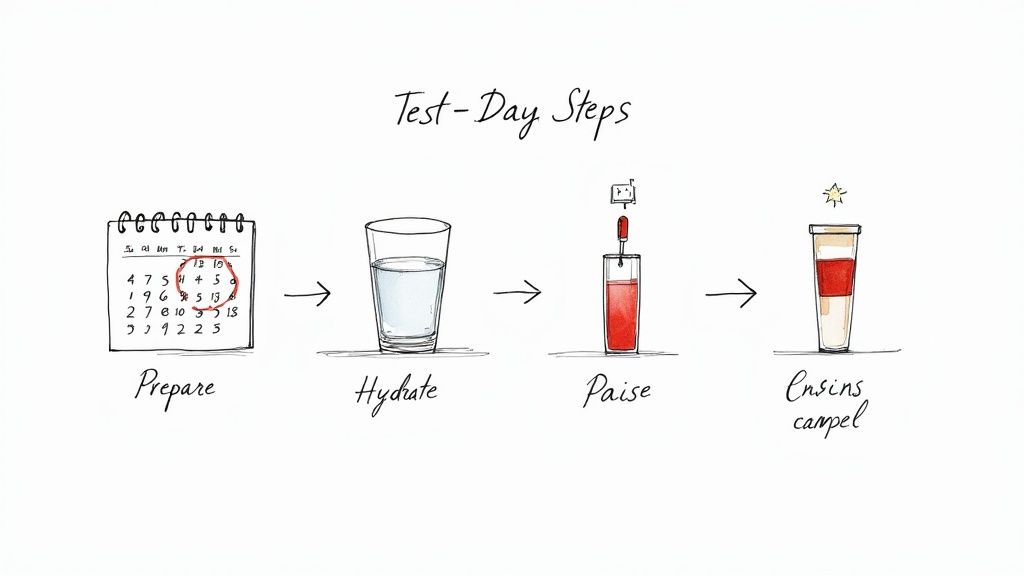
Knowing exactly what to expect can turn a kidney function test from a source of anxiety into a straightforward part of managing your health. We'll walk you through the entire process, so there are no surprises on the day.
Most kidney function tests are simple and require very little special prep. Unlike some other blood tests, you can usually eat and drink as normal beforehand. That said, it’s always best to follow the specific instructions given by your GP or the clinic.
Staying well-hydrated is always a good idea, as it makes the blood draw a bit easier. It’s also vital to tell your doctor about any medications or supplements you are taking, as certain substances can temporarily affect your kidney markers.
Before Your Appointment
To get the most accurate snapshot of your kidney health, your doctor might give you a few simple instructions. These are designed to create a stable baseline for the test, ensuring the results reflect your true health.
A few common recommendations might include:
- Medication Review: Let your clinician know about all prescription drugs, over-the-counter medicines, and even herbal supplements you're taking. Some, like certain antibiotics or non-steroidal anti-inflammatory drugs (NSAIDs), can influence the results.
- Avoid Intense Exercise: Strenuous physical activity in the 24 hours before your test can temporarily raise creatinine levels, so it’s best to schedule it for a rest day.
- Dietary Considerations: In some cases, you may be asked to avoid eating large amounts of red meat before the test, as this can also cause a temporary spike in creatinine.
Following this advice helps make sure your results aren’t skewed by temporary, external factors.
The Sample Collection Process
On the day of your test, the procedure itself is quick and simple. It usually involves collecting a blood sample, a urine sample, or sometimes both. Together, they provide a comprehensive picture of how well your kidneys are working.
1. The Blood Test
The most common part of the process is a quick blood draw to measure markers like creatinine and calculate your eGFR. A healthcare professional, often a nurse or phlebotomist, will:
- Clean a small area on your arm, usually on the inside of your elbow.
- Use a small needle to draw a vial of blood.
The whole thing takes just a few minutes. If you’re anxious about needles, just let the person taking your sample know. They’re experienced in making the process as comfortable as possible. For those interested, our services for blood testing provide a seamless and professional experience.
2. The Urine Sample
You may also be asked to provide a urine sample, mainly to check for protein (albumin). You’ll be given a sterile container and clear instructions on how to collect a 'mid-stream' sample to ensure it's not contaminated.
Once your samples are collected, they are sent to a laboratory for analysis. The results are usually back within a few days, and your GP or clinic will contact you to discuss what they mean.
It's a straightforward procedure that provides invaluable information about one of your body’s most vital organ systems.
What Happens After You Get Your Results
Getting your kidney function test results isn't the final word; it's the beginning of a conversation about your long-term health. Whether the news is good or points to something we need to watch, this is where you and your doctor can build a clear plan. Think of your results as a powerful tool that puts you in the driver's seat.
If your results come back well within the normal range, that’s fantastic news. It tells us your kidneys are doing their job filtering waste from your blood. The focus then simply shifts to keeping things that way. Your doctor will likely suggest routine checks, perhaps once a year, just to make sure everything stays on track—especially if you have risk factors like high blood pressure or diabetes.
When Results Need a Closer Look
If your test flags a potential issue, like a lower-than-expected eGFR or protein in your urine, the first step is not to worry. A single test is just a snapshot in time. More often than not, your doctor will suggest repeating the test in a few weeks or months to see if it’s a one-off reading or a consistent trend.
Should the follow-up tests confirm there's something to look into, we have a clear set of next steps. The goal is always to build a complete picture of your kidney health.
- Further Investigations: Your doctor might order an ultrasound or a CT scan. These imaging tests let us see the actual size and structure of your kidneys, checking for anything obvious like blockages, stones, or other abnormalities.
- Specialist Referral: If your results suggest a more complex issue, you may be referred to a nephrologist—a doctor who specialises purely in kidney health. Exploring your options for referrals ensures you get expert guidance tailored to your exact situation.
- Medication Review: Your GP will take a close look at any medications you're on, as some can impact kidney function. It might be a simple case of adjusting a prescription to take the strain off your kidneys.
Your test results are not a final diagnosis; they are a guide. They give us the information needed to make proactive lifestyle changes that can have a huge impact on preserving your kidney function for years to come.
Taking Control with Lifestyle Adjustments
Whatever your results show, you have a lot of power to support your kidney health. These adjustments are vital for both preventing problems and managing existing conditions.
The big areas to focus on are managing your blood pressure, keeping a healthy weight, and controlling your blood sugar levels if you have diabetes. Small, consistent changes really do add up and make a significant difference in protecting these vital organs.
At The Vesey, our team is here to guide you through every step, from the initial test to making sense of your results and planning for your long-term health. Find out more about our private GP services and how we can support you by visiting https://www.thevesey.co.uk.
CQC-regulated private hospital in Sutton Coldfield. 25+ specialties, 68 expert clinicians. Open 7 days, 8am–8pm. No waiting lists. Free parking.
Book an appointment